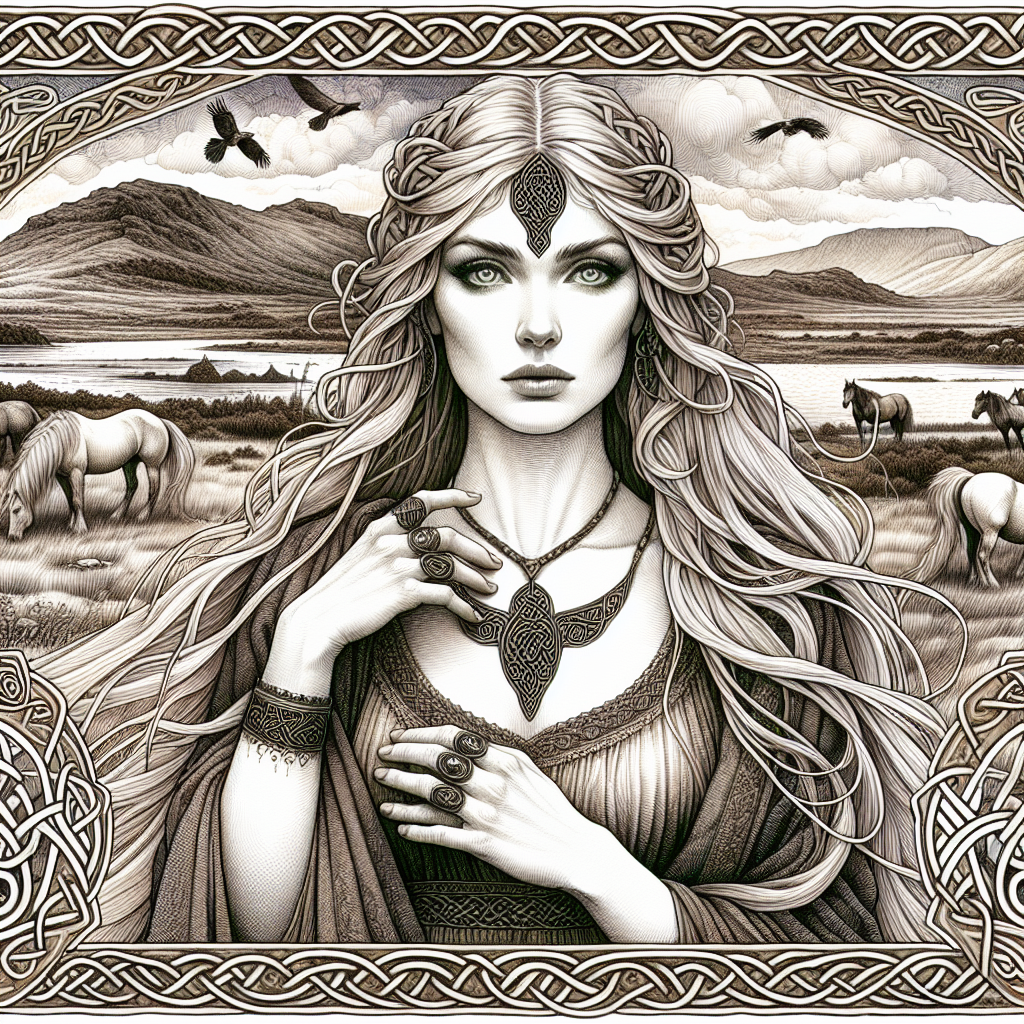
Epona, the goddess of horses, holds a prominent place within Celtic mythology, particularly in the Breton and Continental traditions. Revered as a protector of equines and a symbol of fertility, Epona's significance transcends mere mythology, reflecting the importance of horses in ancient Celtic society.
Historical and Mythological Context
Epona's origins can be traced back to the Gauls, where she was celebrated as a deity of equestrian pursuits. Her presence became more notable during the Roman occupation of Gaul, as she was incorporated into Roman religion. Epona is one of the few Celtic deities whose worship extended beyond the Celtic lands, with altars dedicated to her found across the Roman Empire.
Key Locations of Worship
| Location | Significance |
|---|---|
| Gaul | Primary center of Epona worship |
| Britain | Important sites, including temples |
| Spain | Shrines dedicated to Epona |
| Germany | Altars discovered in provinces |
Iconography and Symbols
Epona is often depicted riding a horse or accompanied by equine figures, emphasizing her connection to these animals. Her imagery is characterized by:
- Horses: Symbolizing strength, nobility, and freedom.
- Foals: Representing fertility and new beginnings.
- Cornucopia: Signifying abundance and prosperity.
These motifs illustrate her dual role as a protector of horses and a goddess of fertility, resonating deeply with agricultural societies.
Key Characters Associated with Epona
While Epona herself is a central figure, she interacts with various characters in Celtic lore:
- The Horsemen: Often depicted in myths as warriors who ride into battle, invoking Epona’s protection.
- The Druids: As spiritual leaders, they would invoke Epona during rituals related to agriculture and livestock.
- Equestrian Heroes: Figures like Cú Chulainn in Irish mythology, who display exceptional horsemanship, often pay homage to Epona.
Themes in Epona's Mythology
Epona's stories encapsulate several key themes within Celtic mythology:
1. Protection and Guardianship
Epona is viewed as a guardian for both horses and their riders. Ancient texts suggest that she was invoked for safe travels and successful journeys, especially in battle.
2. Fertility and Abundance
Her association with fertility extends beyond horses. Epona symbolizes the prosperity of crops and livestock, integral to Celtic agrarian society.
3. Transformation and Transition
Horses in Celtic culture often symbolize transition. Epona's role as a goddess of horses connects her to journeys, both physical and spiritual, guiding souls in their passage.
Cultural Significance
Epona’s worship reflects the deep connection between the Celts and their environment. Horses were not only vital for transportation and warfare but also held symbolic meanings of status and power.
Festivals and Rituals
Celtic communities celebrated various festivals in honor of Epona, which included:
- Equestrian Games: Competitions showcasing horsemanship.
- Harvest Festivals: Offering thanks for successful harvests and livestock.
- Rituals of Protection: Ceremonies to ensure the safety of horses.
The Legacy of Epona
Epona’s influence persists in modern culture. She is often referenced in literature, art, and even modern equestrian practices. Her legacy highlights the enduring relationship between humans and horses, as well as the agricultural roots of Celtic societies.
Conclusion
Epona stands as a testament to the rich tapestry of Celtic mythology and its deep ties to the natural world. Her dual role as a goddess of horses and fertility underscores the significance of these animals in ancient Celtic life. As we explore her myths and symbols, we gain insight into a culture that revered the bond between humans and nature, celebrating both the practical and the divine.
For those interested in delving deeper into Epona's mythology, sources such as "Celtic Mythology: A Guide to the Gods, Heroes, and Legends" (O’Brien, 2017) offer comprehensive insights into her role within Celtic traditions.
Be the first to comment!
You must log in or signup to post comments.